

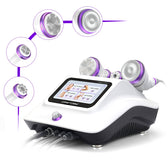
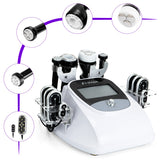

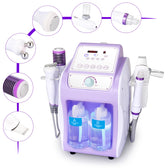
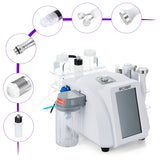
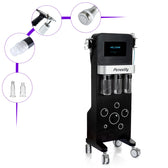

Quick answer: HIFU and RF are both non-invasive, collagen-stimulating treatments — but they work at different depths. HIFU delivers focused ultrasound to 1.5 mm, 3.0 mm and 4.5 mm deep, reaching the SMAS layer — the same structural layer a surgeon tightens during a facelift — which makes it the stronger choice for lifting sagging skin (results last 12–18 months after a single session)[1].
RF (radiofrequency) heats the dermis more diffusely and works best for overall firmness, texture and tone, with results typically maintained through a course of 4–6 sessions[2]. Choose HIFU for sagging and definition; choose RF for texture, tone and general rejuvenation — many clinics combine both.
HIFU bypasses the skin surface entirely, so it is safe for all skin tones (Fitzpatrick I–VI); RF is likewise chromophore-independent[3]. Neither involves needles, incisions or meaningful downtime. Below we compare mechanism, cost, results timeline, safety and — if you run a salon or spa — which machine type makes more business sense.
How They Work: Depth Is the Whole Difference
HIFU (High-Intensity Focused Ultrasound) concentrates energy at precise focal points, creating small thermal coagulation zones (heated to roughly 60–70 °C) at controlled depths: 1.5 mm (superficial dermis), 3.0 mm (deep dermis) and 4.5 mm (SMAS)[1].
Because the deepest setting reaches the SMAS — the fibromuscular foundation surgeons lift in a facelift — HIFU produces a visible structural lift, not just surface tightening. A 2025 systematic review of 16 clinical studies found 92% of patients showed improvement in tightening or wrinkle reduction at 90 days, with effects continuing up to one year[1].
RF (Radiofrequency) heats the dermis across a broader, shallower field. Instead of pinpoint thermal zones, RF remodels existing collagen and stimulates new production over a wider area — which is why aesthetic clinics often describe RF as the "tightening and texture" treatment and ultrasound as the "lifting" treatment[3].
Side-by-Side Comparison
| Factor | HIFU | RF |
|---|---|---|
| Target depth | 1.5 / 3.0 / 4.5 mm (SMAS) | Mid-dermis (broader field) |
| Core strength | Lifting & structural tightening | Texture, tone, general firmness |
| Typical course | 1 session (annual maintenance) | 4–6 sessions |
| Results timeline | Builds over 2–3 months, peaks at 3–6 | Gradual over 2–6 months |
| Duration of results | 12–18 months[1] | 6–12 months (maintenance needed) |
| Downtime | None to minimal | None to minimal |
| Pain level | Moderate (brief zaps over bone) | Mild (deep warmth) |
| Skin tones | Safe for Fitzpatrick I–VI | Safe for Fitzpatrick I–VI |
| Best for | Jowls, jawline, neck, brow laxity | Fine lines, surface firmness, all-over glow |
Results: What the Evidence Says
For HIFU, a 75-patient clinical study evaluating face and neck rejuvenation reported physician-assessed improvement above 80% in every treated area and patient satisfaction above 78% three months after treatment[4]. In a split-face randomized comparison, two different HIFU devices both produced mild-to-moderate improvement with similar efficacy on blinded assessment[5].
For RF, improvements are real but maintenance-dependent: collagen built by RF behaves like natural collagen and gradually fades over 6–12 months if sessions stop[3]. This is why clinics structure RF as a course plus periodic maintenance, while HIFU is typically once per year.
Cost: Session Prices vs. Owning a Machine
Professional treatment pricing (US, 2026):
| Setting | Typical cost | Source & date |
|---|---|---|
| HIFU at a US med spa | $800–$3,000 per session | IVIVA Laser, 2026[6] |
| HIFU at a beauty salon | $150–$400 per session | IVIVA Laser, 2026[6] |
| Branded Ultherapy® (premium HIFU), full face + neck | $2,300–$5,500 | AestheticMedGuide, 2026[7] |
| Clinical RF | $300–$600 per session (4–6 sessions) | EvenSkyn, 2026[2] |
| Thermage FLX (premium RF), full face | $2,400–$4,500, 1 session | EvenSkyn, 2026[2] |
Branded Ultherapy® typically costs 2–3× more than professional generic HIFU for equivalent sessions[6] — and clinical outcome studies show comparable lifting results between professional HIFU systems and Ultherapy at equivalent energy parameters[6].
For salons and spas: owning equipment changes the math completely. A professional HIFU machine or an RF machine is a one-time investment with per-treatment consumables (cartridges for HIFU, gel for RF), and payback depends on session volume. Browse the professional HIFU machine collection or the skin tightening machine collection to compare device classes.
Can You Combine HIFU and RF?
Yes — they are complementary, not competing. HIFU provides deep structural tightening while RF firms the superficial dermis, and some devices integrate both energy types in one platform[8].
Clinics commonly combine HIFU (lifting) with RF (surface quality) for patients who want both, spacing sessions appropriately. If you are also using Botox or fillers, wait about 2 weeks after injectables before energy-based treatments on the same area[3].
Safety and Side Effects
Both treatments have strong safety records when performed by trained operators. Common, temporary effects for both include mild redness, minor swelling and tingling that resolve within hours to days[1][4].
In the 75-patient HIFU study, the most common adverse effect was pain during the procedure (25.3%) and transient redness (6.7%), both self-resolving[4]; a systematic review found other adverse events were rare (about 2%)[1].
Serious complications — burns, nerve irritation — are rare and are almost always linked to operator error or uncertified devices[6]. Contraindications for both include pregnancy, metal implants or pacemakers in the treatment area, and active skin infection or open wounds[6].
General education, not medical advice. Consult a qualified provider and patch test before any new treatment.
Which Should You Choose?
- Choose HIFU if your main concern is sagging — jowls, jawline softening, neck laxity, or a drooping brow — and you want a structural lift without surgery, ideally in one session per year.
- Choose RF if your main concern is skin quality — texture, tone, fine lines and all-over firmness — and you are comfortable with a short course of sessions plus maintenance.
- Combine both if you want lift and surface quality together, which is increasingly the default protocol in aesthetic clinics[8].
- Neither is a facelift substitute: for severe, hanging laxity, surgical resection remains the definitive option[3].
Ready to Offer One (or Both) in Your Studio?
- 7-Cartridge HIFU Machine for Skin Tightening — multi-depth facial lifting
- 7D HIFU Machine with 2 Handles & 7 Cartridges — face + body contouring
- 2-in-1 HIFU Machine (Face & Body Tightening) — dual-application
- LDM Ultrasound Facial Machine 3–10 MHz — gentle ultrasound for texture
- 6-in-1 Ultrasound Facial Machine — ultrasound + multi-therapy
FAQs
Is HIFU better than RF?
Neither is universally better — HIFU wins for lifting sagging skin because it reaches the SMAS layer; RF wins for texture and general firmness. Your primary concern should drive the choice[3].
How long do HIFU results last compared to RF?
HIFU results typically last 12–18 months from a single session[1]; RF results last about 6–12 months and depend on maintenance sessions[3].
Is one more painful than the other?
HIFU feels like brief, deep zaps — most noticeable over bone; RF feels like waves of deep warmth. Clinical data rate HIFU discomfort as moderate but tolerable[4].
Can I do HIFU or RF at home?
Home devices exist for both, at far lower energies. They suit maintenance and mild concerns; moderate laxity still responds best to professional devices[2].
Are both treatments safe for darker skin?
Yes. Ultrasound and RF energy do not target melanin, so both are safe across Fitzpatrick skin types I–VI — an advantage over some laser-based treatments[3].
How much does a professional machine cost?
It varies by technology, cartridge system and power. Compare HIFU and skin-tightening options directly in the collections above, and see our HIFU machine worth-it guide for a full cost breakdown.
Related Reading
- What Is a HIFU Machine for Skin Tightening? — principle, results, side effects & contraindications
- Are HIFU Machines Worth the Money in 2026? — buying assessment & cost breakdown
- Radio Frequency Skin Tightening: A Non-Invasive Solution — the RF pillar
- What to Expect During a Non Surgical Face Lift — the full non-surgical menu
Sources
- Contini M, et al. A Systematic Review of the Efficacy of Microfocused Ultrasound for Facial Skin Tightening (16 studies; 92% improvement at 90 days; adverse events ~2%).
- EvenSkyn. At-Home Skin Tightening in 2026: Clinical Evidence Guide (RF clinical $300–600/session; Thermage FLX $2,400–4,500; RF maintenance 6–12 months). 2026.
- Serdar ZA, et al. Efficacy of high-intensity focused ultrasound in facial and neck rejuvenation. J Cosmet Dermatol. 2019. PMID 31141286 (75 patients; >80% improvement; satisfaction >78%).
- Comparison of effect between HIFU devices for facial tightening: evaluator-blinded split-face study. J Cosmet Laser Ther. 2016. PMID 26985696.
- IVIVA Laser. HIFU Facial Treatment: Complete Guide (2026) (US med spa $800–3,000; salon $150–400; Ultherapy 2–3× premium). 2026.
- AestheticMedGuide. Ultherapy Cost: Pricing by Treatment Area (full face + neck $2,300–5,500). 2026.
- SHEFMON. How High Intensity Focused Ultrasound Works for Skin Lifting (depth mechanics; HIFU+RF combination). 2026.
General education, not medical advice. Consult a qualified provider before any new treatment.


0 comments