

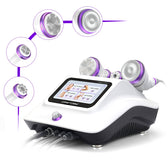
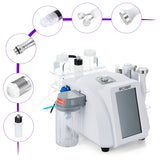
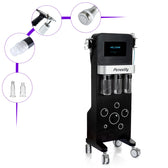
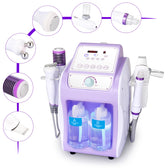
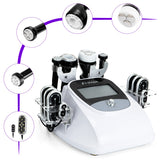

One framing point up front: these units are professional cosmetic and wellness equipment for trained operators, not diagnostic instruments. How a device is regulated depends on its intended use and whether it affects the structure or function of the body, as the FDA sets out for aesthetic devices. Keep that boundary in mind as we separate what the machine does from what a brochure says it does.
What TECAR stands for
TECAR is short for Capacitive and Resistive Electric Transfer. It sits in the family of radiofrequency diathermy — "diathermy" simply meaning heating through tissue. An active electrode held against the body and a larger return plate complete a circuit; the tissue's natural resistance turns the current into heat (the Joule effect). The operator feels a warm hand-piece and the client feels deep warmth; that warmth is the device's physical output, not a clinical outcome.
Two modes do the work, and they are not interchangeable:
| Mode | Electrode | Where energy concentrates | Operator movement |
|---|---|---|---|
| CET (capacitive) | Insulated, with a replaceable cap | Water-rich, lower-resistance tissue near the surface — skin and superficial muscle | Smooth glide |
| RET (resistive) | Non-insulated, in firm contact | Deeper, higher-resistance structures — tendons, ligaments, joint tissue | Slow, weighted, overlapping passes |
This is a difference in how energy couples and which tissue it favours — not a rating of which mode is "stronger". A peer-reviewed review describes these as theorised mechanisms rather than proven effects (Szabo 2022, Journal of Clinical Medicine; PMID 36294470, DOI 10.3390/jcm11206149). That distinction matters when you are deciding what to promise a client.
The 448 kHz question
You will see 448 kHz printed on a great many machines and described as if it were the one correct number. It is a common nominal value, not a universal standard. The published literature places TECAR radiofrequency typically in the range of 300 kHz to 1.2 MHz (Lupowitz 2025, PMID 40182911), and a device operating elsewhere in that band is not automatically inferior.
So how should you read the number? Three rules keep you out of trouble:
- It is a label, not a result. Frequency describes the electrical output of the generator. It does not, on its own, tell you how much energy reaches a given tissue or what a client will experience.
- It does not rank machines. "Closer to 448 kHz" is not a quality scale, and a higher or lower figure is not evidence of a better treatment.
- It is not the whole spec. Electrode design, return-plate area, power delivery, temperature monitoring and the operator's technique all shape the session — and none of them appear in a single frequency figure.
Be wary of fixed penetration claims too. Figures such as "reaches 8 cm" or "penetrates 12 cm" are common in vendor material but are not supported as fixed values in the literature. Depth varies with power, electrode size, tissue resistance, coupling and device design. The honest wording is qualitative: CET favours superficial, water-rich tissue; RET reaches deeper, higher-resistance structures.
What the evidence actually supports
Here is the part most vendor pages skip. A 2025 clinical commentary rated the evidence base for TECAR at Level of Evidence 5 and spelled out the limits: small samples, no large randomised trials, no sham-controlled work, inconsistent protocols and mostly short-term outcomes (Lupowitz 2025; PMID 40182911). Its own conclusion is that these limitations hinder definitive statements about clinical utility.
What that means in practice, without overselling or dismissing:
- The mechanism — radiofrequency current producing tissue heating — is well understood physics.
- Reports of short-term comfort and mobility changes exist, but they are often small studies, frequently combined with exercise or manual therapy, and sham-controlled results are mixed.
- The most defensible position is to treat TECAR as an adjunct to a professional programme, not a stand-alone intervention and not a substitute for medical care.
- Nothing in that evidence base supports promising pain elimination, resolving inflammation, tissue repair or collagen regeneration as device effects. If a spec sheet makes those promises, it has stepped outside what the research shows.
For a fuller look at the limits and the client-screening questions they imply, see our evidence and client-screening guide.
Who should not use it
This is the question a responsible operator asks before the question "what can it do?". The literature is consistent on the main exclusions (S-35; S-36):
- Pregnancy, particularly over the abdomen and pelvis
- Malignancy or a suspicious lesion in the treatment area
- Active infection or sepsis
- A pacemaker or other implanted electronic device — there are reported cases of inappropriate shocks with ICDs
- Deep vein thrombosis or thrombophlebitis
- Severe cardiovascular disease
- Impaired sensation or cognition that prevents a client reporting discomfort reliably
- Open wounds or broken skin, and bleeding disorders
Standard precautions matter as much as the exclusions: keep the return plate monitored for hotspots, use coupling agent evenly, keep the electrode moving rather than dwelling on one spot, titrate intensity to the client's heat sensation, remove metal jewellery from the area, and use extra care with children. A professional setting means a trained operator and a client intake screen — not a device handed to a client for unsupervised use.
What this means when you buy
Knowing what a TECAR machine is changes what you should check before paying for one. Because the frequency number is a label and the depth claims are unreliable, your evaluation should focus on verifiable, physical things: what hand-pieces and heads are included, how temperature is monitored, whether the insulating caps and coupling supplies are readily replaceable, what training and warranty are offered, and whether the supplier describes the unit honestly as cosmetic equipment. Our buyer's guide by clinic type turns that into a comparison you can use, and the cost and ownership guide covers the line items that appear after the purchase.
FAQ
Is TECAR therapy the same as ultrasound or laser therapy? No. TECAR uses radiofrequency current and resistive heating between electrodes; ultrasound uses sound waves and laser uses light. They are different physical modalities with different evidence bases.
Does a 448 kHz machine work better than a 300 kHz one? The frequency figure alone does not establish that. The literature describes a band from about 300 kHz to 1.2 MHz, and frequency does not rank outcomes. Judge the whole specification and the operator's technique.
Can TECAR therapy diagnose or treat a medical condition? No. A TECAR unit is professional cosmetic and wellness equipment. Naming or treating a medical condition belongs to a qualified clinician.
How deep does TECAR penetrate? There is no single fixed depth. It depends on power, electrode design, tissue resistance and coupling. CET favours superficial water-rich tissue and RET favours deeper high-resistance structures, but neither carries a reliable centimetre number.
Can I use one on myself at home? These units are intended for trained operators. Client screening, electrode technique and hotspot monitoring are part of safe use, which is why they belong in a staffed setting.
Where to go next
- Professional TECAR Therapy Machines: A Buyer's Guide — how to choose by clinic type and workflow.
- Who Should Not Use TECAR Therapy? — the evidence limits and client-screening list.
- TECAR Therapy Machine Cost and Total Ownership — the costs that appear after the purchase.
- TECAR vs Monopolar RF vs Shockwave — what each technology actually does.
- TECAR Therapy Machines for Professional Treatment Rooms — the CET and RET systems currently listed.


0 comments