

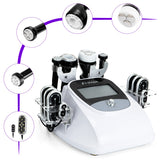


Cavitation treatment pricing: the four variables in your model
Set the service price first, then test it against the room. Four inputs do the work:
- Session fee — what the client pays per appointment. This is the number you control, and it should be set from what your client bookings will bear, not from a competitor's headline.
- Consumables per session — coupling gel and single-use items actually opened for one appointment.
- Room and staff time — the slot length the written protocol requires, including setup and cleanup, and the hours in which the room can realistically be used.
- Utilisation and downtime — the share of available slots that fill, less planned time lost to maintenance, staff training and no-shows.
Notice what is absent: the machine's purchase price. If you have not settled the equipment decision, the cavitation machine price guide covers that side of the comparison. This page starts after the unit is in the room. The cavitation machine buying guide is also worth reading for the verification checks that should be finished before it arrives.
A conservative assumption table
Here is a base case built to be modest rather than flattering. Substitute your own figures; the point is the method, not the numbers.
| Assumption | Base value | Why it is conservative |
|---|---|---|
| Session fee charged to client | $90 | A mid-market service fee, not a claim about your market |
| Gel and disposables per session | $6 | Consumables only; excludes staff time and overhead |
| Appointment length | 45 min | Includes setup and cleanup |
| Billable room hours per day | 6 h | A usable window, not full opening hours |
| Working days per month | 22 | Standard schedule |
| Filled-slot utilisation | 50% | Half the available slots; empty slots earn nothing |
| Planned downtime | 10% | Maintenance, staff training and no-show buffer |
From those inputs: 6 hours × 60 ÷ 45 minutes = 8 slots per day; × 22 days = 176 slots per month. Deduct 10% downtime, then fill 50%: 176 × 0.90 × 0.50 = 79.2, rounded to 79 sessions. Contribution per session is $90 − $6 = $84. Monthly contribution is therefore 79 × $84 = about $6,636.
Payback illustration: months to recover installed cost = installed cost ÷ monthly contribution. With this base case that is C ÷ 6,636, where C is the figure on your own invoice. Substitute your number; this page deliberately does not quote one.
| Filled-slot utilisation | Filled sessions / month | Monthly contribution |
|---|---|---|
| 35% | ~55 | ~$4,620 |
| 50% | ~79 | ~$6,636 |
| 65% | ~103 | ~$8,652 |
All figures are rounded and use the same 176-slot capacity, 10% downtime and $84 contribution. The spread is the lesson: utilisation moves the answer more than any other single input, which is why the table is arithmetic, not a forecast of demand.
Why the assumptions are conservative
The service model should be built on repeat appointments, not on a dramatic one-off outcome. A PubMed review of non-invasive contouring concludes that non-invasive devices fall well short of liposuction, with evidence of varying strength across technologies (PMID: 26566568; DOI: 10.12788/j.sder.2015.0171). The FDA body contouring guidance states that these systems do not treat obesity and do not produce weight loss, that improvement may be temporary, and that multiple treatments are commonly needed.
That combination argues for a conservative frame: modest per-session fees, a course of visits rather than a single appointment, and utilisation based on last quarter's client bookings rather than a hope. For the mechanism and evidence base behind those limits, see the ultrasonic cavitation overview. A model that assumes a temporary, repeat-driven result is easier to defend to staff and to clients than one built on a single transformational session.
Staff, room and booking assumptions
The slot length in the table is only valid if every trained operator can reproduce the same protocol. Protocol specifics belong in the S Shape treatment protocols guide; your model needs only the duration the written protocol actually consumes. Keep a short staff training record with the room file, so a change in appointment length can be traced to a change in technique rather than to a change in demand.
Expectation-setting is part of the same operational picture. AAD guidance on non-invasive fat removal describes temporary swelling, bruising and discomfort, notes that results are subtle relative to liposuction, and recommends assessment by a dermatologist before cosmetic procedures; it also describes one to three sessions for the medical devices it discusses, which are not portable spa units. Use that measured language in intake and consent forms. A client who books expecting a single dramatic change becomes a no-show risk in month two, which is why utilisation deserves more attention than the fee.
Two booking habits protect the model. Record the device, handpiece and setting used at each appointment, so a shift in measurements can be traced to a protocol change rather than guessed at. Treat the 10% downtime line as a real calendar entry: handpieces wear, gel runs out and staff need refresher training. A room booked solid on paper but idle for an afternoon over a missing cable is not a 50% utilisation room. Review the figure monthly against the appointment log.
Turning the model into a defensible price
Set the fee from the contribution you need per filled slot, then check it against what your client bookings will actually bear. Because the clinical and regulatory framing is modest — temporary change, multiple sessions — price for a course of visits and describe the service in terms of measurements and consistency, not outcomes you cannot control. Keep consumables visible: if gel cost rises, per-session contribution falls and the model must be rerun. Track actual utilisation monthly; if it sits below 50%, the answer is more bookings, not a higher fee.
Put the fee and the course length on the same price sheet, and give reception one accurate sentence about the service — a modest change in measurements across a series of visits, not an outcome claim. Consistency at the front desk supports the utilisation assumption better than a discount does. Once the capacity maths supports the decision, the cavitation machine collection is where you match equipment to the room's real throughput.
FAQ
Start with the contribution you need per filled slot and the fee your client bookings will bear. Use the table above as a method, then replace every value with your own.
Be modest. The base case uses 50% of available slots after downtime. If your own booking data supports more, model it as a sensitivity, not as a baseline.
Either, as long as they are in the model. A $6 consumable line against a $90 fee changes contribution by roughly 7%, so ignoring it overstates the room's economics.
No. It gives a formula — installed cost divided by monthly contribution — and a worked illustration. It is arithmetic, not a forecast, and it makes no promise about timing.
No. The FDA guidance describes improvement as often temporary and states that the systems are not a weight-loss treatment; the AAD describes non-invasive results as subtle relative to liposuction. Frame the service around the visit and the measurement, not an endpoint you cannot promise.
Where to go next
- S Shape machines buyer guide — matching equipment to salon size.
- How ultrasonic cavitation works — the mechanism and evidence behind the limits above.


0 comments