

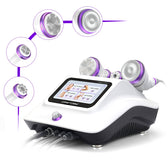

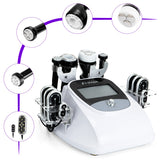

The single most important thing to understand up front is that warranty cover is usually split. The main unit and the handpieces are not covered on the same terms, and on a multi-applicator console that difference determines your real downtime risk.
The warranty split: main unit versus handpieces
On the Surebeauty product FAQs, the standard structure is 12 months on the main unit and 3 months on accessories and handpieces above a stated weight threshold. Read that carefully, because it means the parts you use hardest — the cavitation head, RF head, vacuum handle, laser pads — can fall out of cover while the console itself is still under warranty.
| Component | Typical cover | What to confirm in writing |
|---|---|---|
| Main console / generator | 12 months | Start date, what counts as a claimable fault |
| Handpieces and heavier accessories | 3 months | Which applicators are included, replacement lead time |
| Consumables (gels, tips, seals) | Usually excluded | Reorder cost and availability |
| Shipping for a warranty claim | Varies | Who pays outbound and return freight |
The 3-month handpiece term is not unusual for professional aesthetic equipment — handpieces contain transducers and moving parts that see constant use — but it is a cost you should budget for, not a surprise. Before you buy, ask for the exact list of which applicators carry the 3-month term and the unit price of each replacement. For a seven-handpiece machine, that list is the difference between a clear ownership cost and an open-ended one.
Ask these questions before payment, and keep the answers in writing:
- Does the 12-month cover apply to the console only, or to the handpieces as well?
- Which handpieces fall under the shorter accessory term?
- What is the documented lead time for a replacement handpiece?
- Are spare parts stocked locally, or do they ship from overseas?
- Who pays freight on a warranty replacement, in both directions?
- Does cover require a specific voltage supply or authorised service?
A useful way to price this risk is to cost a single handpiece replacement against your weekly bookings. If a cavitation or RF head is out of cover from month four and takes two weeks to replace from overseas, that is two weeks of reduced capacity on the machine you built your menu around. For a solo practitioner that may be a manageable inconvenience; for a multi-room salon running the same applicator across several clients a day, it is a scheduling problem worth solving before it happens. Ask whether a spare handpiece can be purchased up front and kept on the shelf — many established clinics do exactly that for their most-used applicator, and the option is much easier to arrange while the machine is still under warranty than after a failure.
Keep a simple log from day one: date in service, handpiece serial numbers, hours of use and any fault reports. When a claim is eventually made, that record is what turns a negotiation into a straightforward warranty conversation. It also tells you which applicator is wearing fastest, so you can reorder before it fails rather than during a busy week.
Returns, freight and voltage
Return terms are a common source of confusion because the number quoted in a third-party review may not match the seller's current policy. One review of this category reports a 30-day window, while a product page may state a shorter period and limit returns to quality defects. Rather than rely on either, treat the written policy on your own order as the only one that counts. Confirm the return window, the condition required, who pays return freight and where an overseas return has to be shipped — and get it in the order confirmation.
Voltage is the practical trap that catches new buyers. A console specified for one mains voltage will not simply work on another; you may need a transformer, and using the wrong supply can void cover. Check the nameplate specification against your clinic's supply before ordering, along with the language of the user manual and whether training materials cover every handpiece on your configuration. A console with seven applicators but training videos for three is a support gap you will pay for in staff time.
For how to choose the configuration itself — and which models currently have recorded sales — see the S Shape lineup by salon stage. This article assumes you have already narrowed the model and is about what happens next.
CE, FDA and "registered facility": four different things
Compliance language on aesthetic equipment is often blurred, and blurred wording is a risk for a salon that repeats it to clients. Keep these four concepts separate.
CE marking is a manufacturer's declaration that a product meets applicable European requirements. It is not an FDA approval and says nothing on its own about treatment results.
RoHS is a restriction on hazardous substances in electrical equipment. It is a materials compliance mark, not an efficacy statement.
"FDA-registered facility" describes a manufacturing site's administrative registration. It does not mean the device itself is cleared or approved by the FDA.
FDA clearance / 510(k) is a specific regulatory pathway for a medical device with a cleared indication. A portable, non-focused 30–80 kHz cavitation console is not the same thing as a focused medical ultrasound system. The classification in 21 CFR 878.4590 covers focused ultrasound stimulator systems for aesthetic use — it does not apply to a non-focused portable cavitation handpiece, and citing it as if it did is misleading.
The FDA's position on non-invasive body contouring is that these procedures do not treat obesity or cause weight loss, that results are often temporary, and that device-specific risks exist (FDA, non-invasive body contouring). The AAD likewise notes that non-invasive fat reduction produces results that are subtle compared with liposuction and generally needs a course of sessions (AAD, non-invasive fat removal). A published review of non-invasive contouring reaches the same conclusion — these techniques do not match liposuction for magnitude of change (PMID 26566568). When a listing claims a machine is approved by the regulator for fat reduction, treat that as a statement to verify against an actual clearance letter, not as a fact to repeat. CE, RoHS and a registered facility do not add up to a marketing authorisation.
Beyond the device paperwork, check what your local jurisdiction allows a salon to offer. Equipment compliance and permission to perform a procedure are separate questions, and a CE mark does not settle the second one.
What to put in a pre-purchase checklist
- Exact model and SKU, with the written applicator list.
- Main-unit warranty length, handpiece warranty length, and start date.
- Unit price and lead time for each replacement handpiece.
- Return window, condition required, and freight responsibility.
- Mains voltage specification and manual language.
- Which handpieces are covered by training materials.
- Copies of any CE / RoHS declarations, and clarification of any FDA-related wording.
- Confirmation of what services are permitted locally.
None of these items is a reason to avoid the purchase. They are the questions that separate a predictable operating cost from an expensive surprise, and they are far easier to ask before payment than after a handpiece fails in month four.
FAQ
Why are handpieces covered for less time than the main unit? Handpieces contain transducers, seals and connectors that see constant use, so they carry a shorter accessory term on this equipment class. It is not unusual, but it should be priced into your ownership cost.
Does an "FDA-registered facility" mean the device is cleared for fat reduction? No. It describes registration of the manufacturing site, not clearance of the device. Ask for a clearance letter before repeating any regulatory claim to clients.
Does CE marking let me offer any treatment I want? No. CE is a product compliance declaration. What procedures a salon may perform is a separate local regulatory question.
Can I use the machine on a different mains voltage? Only if the unit is specified for it. Check the nameplate before ordering; the wrong supply can damage the unit and void cover.
Where do I check return terms? On the written policy attached to your own order. Do not rely on a figure from a third-party review — confirm the window, freight and destination in writing.
Where to go next
- What the S Shape name actually covers: What Is an S Shape Machine?.
- Which configurations are live and how they map to salon stages: Compare the six live configurations.
- General selection criteria for this equipment category: How to Choose the Right Cavitation Machine.
The machines this warranty guidance covers are listed in our S Shape collection.


0 comments