

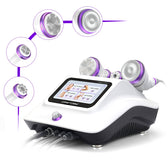
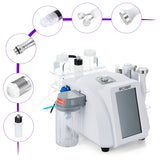
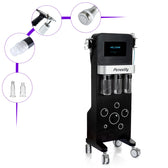
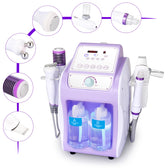
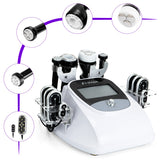

The honest answer to the first question is that there is no single number that fits everyone. The honest answer to the second is that superficial exfoliation has clear limits. This guide sets those expectations using dermatology guidance and the evidence reviews in this category, so you can get the modest benefit the device genuinely offers without expecting more than a surface treatment can deliver.
How often is actually safe at home
Start with what the dermatology guidance says. The American Academy of Dermatology notes that microdermabrasion acts on the top layer of skin and that most people can be treated again about a week after a session — but that some people need several weeks to recover (AAD microdermabrasion FAQs). That is a professional-treatment observation, and it carries an important message: recovery time varies from person to person.
For a home user this translates into a principle rather than a fixed rule. Do not treat the device on a rigid schedule. Treat it based on how your skin responded last time:
- Wait until any redness or tightness has fully settled. A post-session flush is normal, but re-exfoliating while skin is still reactive stacks one insult on another.
- Use the gentlest effective setting. Suction strength is not a result scale, as explained in the suction guide.
- When in doubt, space sessions further apart. Skin that pigmentss or scars easily needs a more conservative approach, which is covered in the contraindications guide.
A skin-resurfacing review places barrier recovery after diamond-tip microdermabrasion on the order of 48 hours in the studied setting. That is a review-level figure, not a measurement of your home machine, but it is a reminder that even a gentle treatment is a real physical process. More frequent sessions do not add up to a deeper result; they mostly add up to more time spent recovering.
Why there is no one-size-fits-all interval
Skin differs in ways that change how often exfoliation is sensible. Oilier, thicker skin often tolerates more frequent treatment; thin, dry or reactive skin needs longer gaps. Sun exposure, climate, hormones and other products in your routine all shift the picture. A retinoid or an acid exfoliant in the same week, for example, changes how much additional abrasion your skin can take.
This is why a listed "once or twice a week" figure should be read as a loose upper range for tolerant skin, not a target. If you are using other active ingredients, treat them as part of the same budget. The sensible method is to start less often than you think you need, observe how your skin looks the following day, and adjust only if the response is consistently comfortable.
A short log helps more than a rule. Note the date, the setting, the number of passes and any redness or tightness the next morning. After a few sessions, your own record will tell you the right interval for your skin better than any generic schedule.
What microdermabrasion results actually look like
Setting expectations starts with the AAD's own framing: results tend to be temporary, and most people need a series of treatments — commonly in the range of 5 to 16 sessions — with maintenance afterward (AAD microdermabrasion FAQs). That is a cosmetic course, not a permanent change.
So what you can reasonably expect from a home device is a temporary improvement in how the surface looks and feels: slightly smoother texture, a fresher appearance, and the removal of loose surface cells. The effect fades, which is why maintenance matters. Evidence reviews for the category describe the data on acne and pigmentation as limited, so improvements in those areas are not something to promise yourself or anyone else.
One practical consequence: take a clear photograph in consistent light before you start, and compare after a few weeks rather than after one session. Surface changes are subtle and easy to misread day to day. A photograph is a better check than the mirror, and it keeps the temporary nature of the result honest.
What it cannot fix
This is the part that matters most for expectations. Superficial abrasion reaches the outermost layer of skin. Problems that sit deeper, or that are structural, are outside its scope.
Acne scars. The AAD distinguishes icepick, rolling and boxcar scars and points to professional interventions, because these are changes in the dermal structure (AAD, acne scars overview). A device that exfoliates the surface cannot rebuild dermal tissue, and no evidence review in this category supports that claim. If scar improvement is your goal, a home kit is the wrong tool — see a dermatologist about options that actually reach the dermis.
Enlarged pores. pore size is largely determined by skin structure and oil production. Removing surface debris can make pores look cleaner briefly, but a home device cannot permanently shrink them. Any "smaller pores" claim should be read as a temporary cosmetic effect at best.
Blackheads. The vacuum on a diamond device lifts loose surface debris, which is why it can feel satisfying. Deep follicular plugs are a different matter: surface suction does not reliably clear them, and aggressive suction to chase them is more likely to cause irritation than a lasting clear-out.
Deep wrinkles and pigmentation. Surface exfoliation can make skin look a little brighter for a time. It does not remodel collagen or remove pigment that sits deeper in the skin. Sustained results in those areas come from other approaches, not a handpiece.
When over-exfoliation becomes the problem
Using the device too often is one of the few ways a home routine can actively backfire. Signs that you are doing too much include persistent redness, tightness, stinging when you apply ordinary products, flaking and a sudden increase in sensitivity. Those are signals to stop and let the barrier recover, not signs to push through.
If they appear, pause treatments until the skin is comfortable again, simplify your routine to gentle cleanser and moisturiser, and resume — if at all — at a longer interval and a lower setting. Persistent symptoms warrant professional advice. This is another reason the mechanism and limits guide stresses that "gentle" is not the same as "no effect."
FAQ: frequency and results
Can I use it every day? Not as a general rule. The AAD notes some people need several weeks to recover between professional treatments; daily home use gives the barrier no chance to settle. Space sessions by your skin's response.
Will I see results after one session? You may notice smoother-feeling skin, but the AAD frames results as temporary and usually requiring a series of 5 to 16 sessions. Judge the device over weeks, not hours.
Does it remove blackheads or shrink pores? It lifts loose surface debris and may make pores look cleaner briefly. It cannot permanently shrink pores or clear deep plugs.
Can it fade acne scars? No. Scars are structural changes in the dermis that surface exfoliation cannot rebuild. A dermatologist can discuss treatments that reach that layer.
Is redness a sign it is working? No. Redness is a response to abrasion and suction, not proof of a deeper result. Lots of redness more often means the setting was too high.
Where to go next
- For how the tip and vacuum work and where the evidence stops, read Diamond Microdermabrasion Explained.
- For why a bigger suction number is not a better treatment, see Microdermabrasion Suction Numbers.
- For who should skip a session and how to clean the device, open Who Should Not Use a Diamond Device.
The home devices this guidance applies to are in our diamond microdermabrasion collection, with replacement tips alongside them.


0 comments