

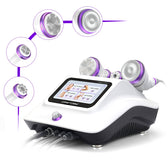
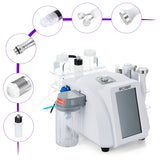
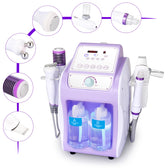
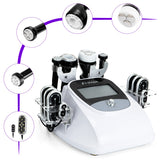

That distinction disappears in most buying guides, where the same device is described as clinic-level and sold as a fix for acne scars and enlarged pores. This guide gives you the accurate baseline first — what the tip and vacuum physically do, how dry diamond differs from the water-assisted machines you may also see, what the research supports, and where the language has to stop. Once you have that frame, the sales claims are much easier to judge.
What diamond microdermabrasion actually is
Microdermabrasion is a non-invasive, mechanical way of removing the top layer of skin. The American Academy of Dermatology describes it as a procedure that "gently removes the top layer of skin," often felt as a sanding sensation rather than a painful one, with a full-face session taking roughly 30 to 40 minutes (AAD microdermabrasion FAQs).
Within that category there are two traditional tip technologies. Crystal systems spray aluminium oxide crystals at the skin and suction them back with the loosened cells. Diamond-tip systems use a solid, abrasive diamond-coated head that is drawn across the skin while the vacuum does the removal. A review of skin-resurfacing techniques covers both as forms of mechanical dermabrasion acting on the epidermis and superficial dermis (skin resurfacing review).
The practical differences between the two tip types are about the tool, not a ranking of results:
| Crystal tips | Diamond tips | |
|---|---|---|
| Abrasive material | Loose aluminium oxide crystals | Solid diamond-coated head |
| Consumables | Crystals must be replenished | Tip is reusable and cleanable |
| Debris | Airborne crystal dust to manage | No loose crystal media |
| What it changes | Running cost and cleanup | Running cost and cleanup |
A diamond tip is reusable and easy to disinfect, which is why it became the default in portable kits. There is no good primary evidence that a diamond tip produces a "deeper" or "more professional" result than a crystal system at the same settings — only that it is a cleaner, more contained way to deliver the same class of superficial abrasion. Treat any claim of one being clinically stronger as marketing until someone shows you the comparative trial.
The vacuum is part of the treatment, not an add-on
The suction on a diamond device is not simply there to tidy up. It does two jobs at once: it holds the skin taut so the tip can abrade evenly, and it removes the dislodged cells and debris as they are produced. A machine with a diamond head but no functioning vacuum is not doing microdermabrasion properly — the abrasion happens, but the removal step is missing.
That is also where the category's favourite marketing number comes from. Listings advertise peak suction in cmHg or Kpa, as though a larger figure meant a better treatment. It does not. Suction is a measure of the vacuum the unit can generate, not a dose of exfoliation and not a route to the deeper layers. We have a separate explanation of why a higher cmHg number is not a better microdermabrasion treatment if you want to go deeper on that specific claim. For the baseline here, the only useful thing to know is that most home units are adjustable and the sensible approach is to start at the lowest tolerated setting.
Dry diamond versus water-assisted resurfacing
You will see two broad families sold side by side, and they are not interchangeable.
Dry diamond microdermabrasion uses the abrasive tip plus vacuum described above, with no liquid in the circuit. Its job is superficial exfoliation.
Water-assisted resurfacing — often labelled hydro dermabrasion or hydradermabrasion — pairs a liquid stream with suction to cleanse and flush the surface while applying a solution. It is a wet technique with a different mechanism and a different intended feel. The evidence and the aftercare assumptions for one do not transfer to the other.
This matters because much of the "at home versus salon" content online quietly swaps the two. A machine that combines both functions in one housing is a hybrid, not a pure diamond device. If you want a direct comparison of the wet category against dry microdermabrasion, our existing hydradermabrasion versus microdermabrasion guide handles that question separately; this article stays with the dry diamond tip.
For a buyer, the practical upshot is simple: decide which mechanism you are actually buying before comparing prices. A 2-in-1 or 3-in-1 label describes how many functions are bundled — exfoliation, blackhead vacuum, spray or hydration — not how strong the exfoliation is.
What the evidence supports — and what it does not
Here is the honest tiering, using the same sources a dermatologist would reach for.
Reasonably supported, with limits. Microdermabrasion produces a temporary improvement in surface texture and appearance. The AAD describes results as tending to be temporary and notes that most people need a series of treatments, commonly in the range of 5 to 16 sessions, with maintenance afterward (AAD microdermabrasion FAQs). That is a course of cosmetic treatments, not a one-off fix, and it is the frame you should use for any home device as well.
Limited or mixed. For acne and pigmentation specifically, an evidence-based review and a later reappraisal both found the supporting data limited and inconsistent (PMID 20048628; PMID 16792646). "Helps the look of the surface" is defensible. "Clears acne" or "removes pigment" is a much stronger claim than those reviews support. If clearing active acne is your goal, a home exfoliation device is not the first-line answer.
Not supported for this device. Acne scars, permanently smaller pores, deeper wrinkles and any claim of a lasting structural change. Scars sit in the dermis and need interventions that reach it; the AAD directs people with icepick, rolling or boxcar scars toward professional treatments rather than surface exfoliation (AAD, acne scars overview). A superficial abrasive tip cannot promise to rebuild dermal tissue, and no review of this category supports that it does.
The regulatory position is consistent with that boundary. In the United States, 21 CFR 878.4820 classifies dermabrasion devices as a regulated medical device category for specific medical use — a portable consumer diamond-tip kit is not a cleared device under that classification (eCFR 21 CFR 878.4820). Consumer kits are sold as cosmetic or general-wellness products without a marketing authorisation for any medical condition. If a listing says otherwise, ask to see the clearance.
What a session feels like and what recovery looks like
A dry diamond session is usually described as a gritty or sanding sensation, not a sharp pain. There is no downtime in the usual sense: most people return to normal activity straight away. The AAD notes that some people are pink or red afterwards, with mild swelling, and describes the feeling as similar to a sunburn or windburn for a day or two; the pinkness typically settles within about a day (AAD microdermabrasion FAQs).
A skin-resurfacing review reports that the skin barrier after diamond-tip microdermabrasion recovers on a timescale of roughly 48 hours in the studied setting (skin resurfacing review). That is a review-level figure, not a measurement of any particular home machine, but it is a useful reminder that this is a real physical insult to the surface — "gentle" does not mean "no effect," and stacking sessions too close together is how people end up with an irritated barrier.
On re-treatment, the AAD says many people can be treated again after about a week, while some need several weeks to recover. That is individual variation, not a fixed schedule to copy into a routine. Our guide to how often to use microdermabrasion at home and what it cannot fix covers the expectation-setting side in detail.
Who should pause before using one
Most healthy adults tolerate a superficial exfoliation well, but some situations call for a dermatologist's input first. The AAD specifically warns people to check before a spa treatment or a home kit if they have a growing, bleeding or changing spot; if they are using isotretinoin or have used it in the past six months, because the risk of scarring is higher; or if they scar easily (AAD microdermabrasion FAQs). Active breakouts, rosacea, eczema, sunburn and broken skin are common reasons to skip a session, and darker skin tones carry a higher risk of post-inflammatory pigmentation, so sun protection matters.
This is a short list, not the full contraindication picture. The fuller self-check — including what to do when a session has already started — is in our contraindications and cleaning guide.
FAQ: the questions this category keeps repeating
Is diamond microdermabrasion the same as a chemical peel? No. A peel uses acids to dissolve surface bonds; microdermabrasion physically abrades the surface. Different mechanism, different aftercare.
Will it remove blackheads? The vacuum can lift loose surface debris, which is why it feels satisfying, but it is not a treatment for deep follicular plugs. Blackhead vacuum is a separate function on some 2-in-1 machines, not a property of the diamond tip.
Can it tighten skin or build collagen? A temporary smoother look from exfoliation is not the same as new collagen. No primary source in this category supports a collagen claim for a home diamond device.
How many sessions will I need? The AAD's 5-to-16-session range is for a professional course of cosmetic treatments, with results described as temporary. A home kit should be judged against that modest expectation, not against a promise of permanent change.
Is a more expensive machine necessarily stronger? Price usually reflects build quality, adjustable range and bundled functions, not a higher grade of exfoliation. Our price and specification comparison shows how four current models line up.
Where to go next
- For how suction numbers are used in marketing — and why the peak figure is not a result — read Microdermabrasion Suction Numbers.
- For an honest look at what a home device can and cannot do versus a salon treatment, see At-Home vs a Salon Treatment.
- For current models, real prices and what each function changes, open Diamond Microdermabrasion Machines Compared.
The machines described here are grouped in our diamond microdermabrasion collection, alongside the replacement tip sets.


0 comments