




Why Does Aftercare Matter After a Water-Assisted Pass?
Hydro dermabrasion (hydradermabrasion) is a generic technique category: under negative pressure and a fluid stream it lifts surface dead cells while a water-based solution is applied in the same pass (skin resurfacing review). Because the technique removes surface cells, the barrier needs time to re-form — the review notes recovery at roughly 48 hours after diamond-tip microdermabrasion.
For intake, frame aftercare as a behaviour to teach, not a product to sell. The AAD advises moisturising and sun protection after exfoliating treatments and records that transient pinkness or slight swelling usually settles within about one day (AAD microdermabrasion FAQs). Hydro-specific data run longer for stronger passes: an eight-subject line-field confocal OCT study saw visible erythema resolve over 2–5 days after light-to-moderate treatment, with no reported breakouts, irritation, dryness or post-inflammatory hyperpigmentation (Razi 2024, DOI: 10.1111/srt.13684, PMC: PMC10983707).
Small studies report no complications (Freedman 2008, PMID: 19146604, DOI: 10.1111/j.1473-2165.2008.00406.x) and no breakouts, dryness or pigment change in the imaging study. Treat these as observed timelines, not promises.
The Four-Phase Aftercare Timeline at a Glance
Use this table as the skeleton of your written plan. It is deliberately conservative: your assessment and the device user manual override a generic clock.
| Phase | Cleanse and moisturise | Sun protection | Actives | Hands-off rule |
|---|---|---|---|---|
| 0–24 hours | Gentle, lukewarm cleanse; bland moisturiser; pat dry, never scrub (AAD, Microdermabrasion: FAQs) | Broad-spectrum SPF 30 or higher if exposed; reapply at least every 2 hours (AAD, How to fade dark spots in darker skin tones) | None — no retinoids, acids or exfoliants | Do not pick, rub or peel; let flaking shed on its own |
| 24–72 hours | Continue gentle cleanse and moisturise; a simple hydrating layer if tight | SPF 30 or higher daily, reapply roughly every 2 hours in sun | Still paused unless you cleared them | No waxing, threading or friction on the treated area |
| Days 4–7 | Resume your normal gentle routine as tolerated | Keep daily SPF 30 or higher, reapply as above | Reintroduce one active at a time, per your assessment | No picking at flaking; stop and review if irritation returns |
| Long term | Maintain gentle cleansing and daily moisturiser | Daily broad-spectrum SPF 30 or higher; tinted with iron oxides for deeper tones | Add back only what the skin tolerates | Protect the barrier rather than chasing faster results |
What Should Clients Do in the First 24 Hours?
The first day is about doing less. Have your client cleanse with lukewarm water and a gentle, fragrance-free cleanser, pat dry and apply a bland moisturiser; the AAD's post-exfoliation advice is moisturising and sun protection (AAD, Microdermabrasion: FAQs). If the area will see daylight, apply broad-spectrum SPF 30 or higher and reapply at least every two hours while exposed (AAD, How to fade dark spots in darker skin tones).
What they should not do matters just as much. A light pass may leave transient pinkness and tightness, while a moderate pass can leave visible erythema for several days (Razi 2024, DOI: 10.1111/srt.13684, PMC: PMC10983707). Set that expectation before they leave. Ask them to skip retinoids, acids, scrubs and any new active until you say otherwise — the pause follows your assessment, not a fixed hour count. Be explicit about hands: no picking, rubbing or peeling at flaking skin, since lifting flakes can prolong redness while the barrier recovers (PMC: PMC4155739).
What Changes Between 24 and 72 Hours?
By day two or three, most of the visible reaction should be plateauing, not building. Keep the gentle cleanse, moisturiser and daily SPF 30 or higher, reapplied roughly every two hours in sun (AAD, How to fade dark spots in darker skin tones). A hydrating layer is fine if the skin feels tight; a new serum to "speed things up" is not.
Your instructions prevent most problems here. The imaging study documenting 2–5 day erythema after light-to-moderate hydro treatment reported no breakouts, dryness or post-inflammatory hyperpigmentation (Razi 2024, DOI: 10.1111/srt.13684, PMC: PMC10983707), so a new eruption should be assessed, not waved off as a "purge". Tell clients to avoid waxing, threading, strong friction and very hot showers, and to keep actives paused unless cleared.
Is Recovery Different From Microdermabrasion?
Microdermabrasion is a dry crystal- or diamond-tip abrasion; hydro dermabrasion pairs exfoliation with a water-based solution in one pass, so aftercare principles overlap (PMC: PMC4155739). What differs is the clock: the AAD records microdermabrasion pinkness or mild swelling settling within about one day, while the hydro imaging study tracked visible erythema over 2–5 days after light-to-moderate passes (Razi 2024, DOI: 10.1111/srt.13684, PMC: PMC10983707). These are different windows, not a ranking of which is "safer". For a side-by-side breakdown, see hydradermabrasion vs microdermabrasion.
How Do You Adapt Aftercare for Deeper Skin Tones?
For deeper skin tones, the sunscreen instruction is more specific. Broad-spectrum SPF 30 or higher is the baseline, and a tinted formula containing iron oxides helps prevent and fade dark spots, reapplied about every two hours (AAD guidance on dark spots). Professional evaluation is advised for deeper tones when reactions depart from the expected pattern (AAD, Chemical peels: FAQs).
Build this into the consultation: agree on the tinted, iron-oxide option before treatment, and say that pigment change is a reason to call you, not to self-treat. The small hydro studies did not report post-inflammatory hyperpigmentation (Razi 2024, DOI: 10.1111/srt.13684, PMC: PMC10983707), but small studies guarantee nothing for every skin type. For the mechanism and candidacy overview behind this protocol, see our hydro dermabrasion facial pillar guide.
Which Red-Flag Symptoms Mean "Stop and Call a Professional"?
Give clients a short list of symptoms that break the expected pattern. Persistent or worsening redness, burning, itching, increasing swelling or any sign of infection should prompt them to stop home care and contact a qualified professional; the FDA notes that aesthetic-device effects may be less than expected, may be temporary and carry risks (FDA, Aesthetic (Cosmetic) Devices).
A changing lesion, a new or unusual reaction, or one that misses the graded timeline belongs with a dermatologist, not a self-treatment plan (AAD, Microdermabrasion: FAQs; AAD, Chemical peels: FAQs). Keep the sheet short. For the full postponement list — recent isotretinoin use, active infection, keloid tendency, pregnancy and more — see who should avoid hydro dermabrasion.
What Should You Put on Your Written Aftercare Sheet?
A one-page take-home sheet separates a professional service from a pleasant treatment. Keep it plain, leave a blank for your contact number, and date it:
- Cleanse with lukewarm water and a gentle, fragrance-free cleanser for the first 24 hours; pat dry, never rub (AAD, Microdermabrasion: FAQs).
- Apply a bland moisturiser twice daily; a simple hydrating layer is fine if the skin feels tight.
- Use broad-spectrum SPF 30 or higher every day and reapply at least every two hours in sun; choose a tinted, iron-oxide formula for deeper tones (AAD, How to fade dark spots in darker skin tones).
- Do not use retinoids, acids, scrubs or any new active until we say so — timing comes from your assessment, not a generic clock.
- Do not pick, rub or peel flaking skin, and avoid waxing, threading or friction on the treated area.
- Call us for increasing redness, burning, itching or swelling; call a doctor for a changing lesion or any sign of infection.
- Return for the next session on the schedule we agreed, not sooner because the skin looks clear.
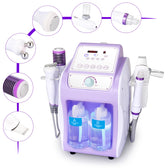
Your assessment decides when actives resume. If you are standardising a service menu, compare configurations in the hydro dermabrasion machine collection.
Frequently Asked Questions
Can I wash my face tonight after a hydro facial?
Yes — but gently. Use lukewarm water and a mild cleanser, pat dry and apply a bland moisturiser; no scrubbing or actives tonight. The AAD recommends moisturising and sun protection after exfoliating treatments (AAD, Microdermabrasion: FAQs).
When can I wear makeup again?
Follow your provider's timing, not an assumed immediate return. The first 24 hours prioritise gentle cleansing, moisture and SPF 30 or higher over coverage (AAD, Microdermabrasion: FAQs).
Why is my skin still red on day three?
A light pass may settle in about a day, but moderate-intensity hydro treatment can leave visible erythema for 2–5 days (Razi 2024, DOI: 10.1111/srt.13684, PMC: PMC10983707). Redness that is worsening rather than fading, or that comes with burning or swelling, is a reason to call your provider (FDA, Aesthetic (Cosmetic) Devices).
Can I use my retinol or vitamin C again?
Not until your provider says so. Aftercare pauses retinoids, acids and exfoliants while the surface settles; restart one active at a time and stop if irritation returns (AAD, Microdermabrasion: FAQs).
What sunscreen should I use if I have dark spots?
A broad-spectrum SPF 30 or higher, reapplied about every two hours in sun. If you have deeper skin tones or dark spots, a tinted sunscreen with iron oxides helps prevent and fade them (AAD, How to fade dark spots in darker skin tones).
Is it normal to break out after hydro dermabrasion?
The small imaging study did not report breakouts, so do not assume a new breakout is an expected "purge" (Razi 2024, DOI: 10.1111/srt.13684, PMC: PMC10983707). Have it assessed, and check with your provider before your next session.
Where to Go Next
- What is hydro dermabrasion? The pillar overview
- Hydradermabrasion vs microdermabrasion: which is right for your skin?
- Hydro dermabrasion side effects and who should avoid it
- Browse all machine configurations in the current hydro dermabrasion range
- Which serums and solutions suit your skin type
- If breakouts appear after a facial: purge or irritation?


0 comments