


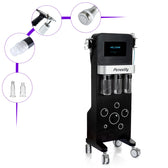

Quick answer: Ultrasonic cavitation uses low-frequency ultrasound (typically 30–80 kHz) to create microscopic bubbles in the fluid around fat cells. When those bubbles implode, the resulting pressure wave disrupts the fat cell membrane, and the released contents are cleared by your lymphatic system and liver. A peer-reviewed review of 231 studies found ultrasound lipolysis produces a 2–4.6 cm reduction in abdominal circumference.[1] It is a body-contouring treatment for localised fat — not a weight-loss method.
Ultrasonic cavitation has become one of the most requested non-surgical body sculpting treatments, both in professional salons and in home-use devices. This guide explains exactly how it works, what the research actually shows, what a realistic session protocol looks like, and how to choose a machine.
How Does Ultrasonic Cavitation Work?
The treatment relies on a physical process called acoustic cavitation.
- Sound waves enter the tissue. A handheld applicator emits low-frequency ultrasound, typically in the 30 kHz to 80 kHz range.[2]
- Microscopic bubbles form. These pressure changes create tiny bubbles in the interstitial fluid surrounding fat cells (adipocytes).
- The bubbles implode. As they collapse, they generate localised pressure waves and microjets that mechanically stress the adipocyte membrane.
- The membrane breaks down. Histological studies on human adipose tissue confirm that ultrasound-induced cavitation damages fat cell structure, followed by secondary cell death over the next 24–48 hours.[3]
- Your body clears the contents. The released glycerol and free fatty acids enter the interstitial fluid and are transported through the lymphatic system to the liver for processing and elimination.
That last step explains the most misunderstood part of cavitation: the device does not remove fat. It breaks fat down and hands the clearance job to your body — which is why results build gradually over weeks rather than appearing the moment you step off the treatment table.
Key takeaway: because clearance depends on your lymphatic system, hydration and light activity between sessions materially affect your outcome. See our dedicated guide: Cavitation Treatment: How to Get the Best Results.
What Happens During a Treatment?
A standard session is straightforward and requires no downtime:
- Consultation. A qualified provider reviews your health history and checks for contraindications. Many clinics take baseline measurements or photos.
- Preparation. The treatment area is cleansed and a conductive gel is applied so the ultrasound head glides and transmits energy efficiently. Our own equipment uses a dedicated gel — see 300g Ultrasound Gel for Cavitation Therapy ($16.99).
- The session. The provider moves the handpiece in slow, circular or sweeping motions. Most people feel warmth and hear a soft buzzing or humming. A session lasts 30–60 minutes depending on area size.[2]
- Afterwards. There is no downtime — you can drive home and return to normal activity. Providers typically recommend extra water for the following 24–48 hours and light activity such as walking.[4]
Target Areas for Cavitation
Cavitation works best on areas with soft, pinchable fat — generally a skinfold thickness of at least 2 cm.[5]
| Commonly treated | Notes |
|---|---|
| Abdomen & love handles | Most requested area; matches the 2–4.6 cm circumference data[1] |
| Thighs (inner & outer) | Often combined with lymphatic drainage |
| Buttocks | Good candidate when fat is pinchable |
| Back & flanks ("bra bulge") | Fibrous areas respond well |
| Upper arms | Smaller zone, shorter sessions |
| Chin & jawline | Requires a smaller handpiece |
Not suitable for: bony or thin-skinned areas such as the front of the neck, the sternum, or joints — there is not enough fat tissue to safely absorb the energy.[4]
Does Ultrasonic Cavitation Actually Work? What the Research Shows
This is where most articles stay vague. Here is what peer-reviewed evidence shows:
The evidence is real but the effect is modest. A dermatology review covering 231 studies concluded that ultrasound is efficacious for body contouring, and specifically that ultrasound lipolysis results in a 2- to 4.6-cm decrease in abdominal circumference. The same review found the modality safe across all skin types, with minimal adverse effects limited to procedural pain, post-procedure erythema and swelling.[1]
It changes shape, not the number on the scale. Cavitation is a contouring tool for people already close to their target weight who want to address specific stubborn pockets. It is not designed as a weight-loss treatment, and presenting it as one is the single most common source of client disappointment.[5]
| What cavitation does | What cavitation does not do |
|---|---|
| Reduce circumference in treated area (2–4.6 cm)[1] | Produce significant weight loss |
| Permanently destroy treated fat cells | Replace diet and exercise |
| Improve the appearance of cellulite | Tighten significantly lax skin on its own |
| Provide gradual, natural-looking contouring | Deliver surgical-level fat removal |
Why combining technologies often helps. Because cavitation alone provides limited skin tightening, many clinics pair it with radiofrequency (RF), which delivers controlled thermal energy to stimulate collagen. If skin laxity is a concern, ask about a cavitation + RF protocol — machines such as our Home-use 30K with RF Skin Tightening ($278.00) are built around exactly that combination.
Realistic Timeline & Session Protocol
A typical course follows this shape:
| Stage | What to expect |
|---|---|
| Session 1 | Mostly temporary tissue response. Too early to judge. |
| Sessions 2–4 | Subtle early changes — clothes fitting slightly looser, small circumference reduction. |
| Sessions 6–10 | Visible, measurable improvement; where a full course typically lands. |
| 6–12 weeks | Final results, as your body continues metabolising released fat for weeks after the last session. |
Protocol: treatments are generally performed 1–2 times per week with at least 48 hours between sessions, across a total course of 6–12 sessions (most commonly 8–10). Spacing matters — skipping sessions or cramming them interrupts the cumulative lymphatic clearance the treatment depends on.[6]
Are results permanent? Once a fat cell is destroyed through cavitation it does not regenerate. However, remaining fat cells can still expand if you gain weight, which is why a stable diet and activity level matter for maintaining results long term.[5]
For the full week-by-week breakdown, see Cavitation Treatment: How to Get the Best Results.
Ultrasonic Cavitation Machines: 30K vs 40K vs 80K
The "K" refers to the ultrasound frequency the handpiece emits. Rather than guess which suits you, note that 40K is the most widely adopted frequency for body cavitation, while 30K tends to appear in gentler or multi-function units and 80K in higher-powered professional systems. Because the right choice depends on treatment area, client volume and whether you need vacuum or RF attachments, we cover this in depth in a dedicated comparison:
→ 30K vs 40K vs 80K Cavitation Machines: What's the Difference?
Below are the machines currently available, with prices verified from product pages on 31 October 2026:
Recommended machines
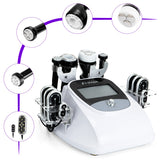
Best all-round choice — 40K Ultrasonic 6-in-1 with 5mW Lipo Laser ($315.00)
Six functions in one unit: cavitation, RF, vacuum and 5mW lipo laser pads for combined contouring. Our most balanced option for salons needing multiple modalities.
→ View the 40K 6-in-1 ($315.00)
Best for professionals upgrading — 40K 9-in-1 Aristorm 2.5 ($518.00)
Nine-in-one configuration for clinics running a broad treatment menu.
→ View the 40K 9-in-1 ($518.00)
Highest power — 80K Cavitation with Vacuum Therapy ($950.00)
80 kHz output paired with vacuum therapy; suited to high-throughput professional settings.
→ View the 80K with Vacuum ($950.00)
Best value for home & mobile use
| Machine | Price | Best for |
|---|---|---|
| Vivashape Cavitation Machine | $159.00 | Lowest entry cost |
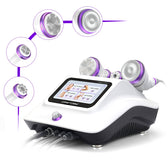
| 40K 3-in-1 Ultrasonic | $198.00 | Home users wanting multiple functions |
| Home-use 30K + RF Tightening | $278.00 | Those prioritising skin firming too |
Don't overlook consumables: a proper ultrasound gel is required for efficient energy transmission — 300g Ultrasound Gel ($16.99).
→ Browse the full range: Shop all cavitation machines
Cost context: professional cavitation sessions in the US typically run $150–$350 each, with a full 6–12 session course costing roughly $1,000–$1,800.[7][8] Against that baseline, a home machine at $159–$315 pays for itself within the cost of a professional course — which is why many buyers choose to own rather than book.
Precautions & Who Should Not Use Cavitation
Cavitation is not appropriate for everyone. Do not use it if you:
- Are pregnant or breastfeeding
- Have a cardiac pacemaker or metal implants in the treatment area
- Have a history of cancer
- Have a coagulation disorder or take blood-clotting medication
- Have significant medical conditions such as diabetes or osteoporosis
- Have active infection, inflammation, open wounds or skin disease in the treatment area
- Have a skinfold thinner than 2 cm in the target area
Additional waiting periods apply after surgery (typically 6 months), Botox (around 3 months in the target area), dermal fillers (around 2 weeks), antibiotics (until the course is finished) and laser or IPL treatments (around 2 weeks). Always disclose your full medical history and consult a qualified professional before beginning treatment.[5][9]
For a detailed breakdown of risks and aftercare, read The Side Effects of Ultrasonic Cavitation.
FAQ
Does ultrasonic cavitation work?
Yes, for localised fat reduction and contouring. A review covering 231 studies found ultrasound lipolysis produces a 2–4.6 cm decrease in abdominal circumference.[1] It contours rather than produces weight loss.
How many days after cavitation will I see results?
Early subtle changes often appear after sessions 2–4, with visible measurable change at sessions 6–10. Your best results typically appear 6–12 weeks after beginning the course, because your body keeps metabolising the released fat for weeks afterwards.[2][5]
How many sessions do I need?
Most protocols run 6–12 sessions, commonly 8–10, spaced 1–2 times per week with at least 48 hours between appointments.[2][6]
Is the destruction of fat cells by cavitation permanent?
Yes — destroyed fat cells do not regenerate. But remaining fat cells can still expand if you gain weight, so maintaining stable habits protects your result.[5]
Can I do cavitation two days in a row?
Generally no. Treatments should be spaced at least 48 hours apart so your lymphatic system can clear the released fatty material without becoming overloaded.[6]
Is it possible to overdo cavitation?
Yes. Excessive frequency can cause skin irritation or discomfort. Follow the recommended spacing — more is not better.[6]
Does it tighten skin?
Cavitation generates some thermal energy in the dermis which can mildly improve firmness, but if laxity is a significant concern, combining it with RF skin tightening gives substantially better results.[1][9]
Which is better: a 30K or a 40K cavitation machine?
A 40K machine generally emits stronger sound waves and is the most widely used frequency for body treatments, while 30K units tend to be gentler or multi-function. The right choice depends on your treatment menu — see our 30K vs 40K vs 80K comparison.
Does cavitation work on cellulite?
It can reduce the appearance of cellulite by shrinking the fat volume pressing against the connective bands beneath the skin, though results vary.[1][9]
How much does a professional course cost in the US?
Roughly $150–$350 per session, or $1,000–$1,800 for a full course.[7][8]
Summary
Ultrasonic cavitation is a well-evidenced, non-invasive way to reduce localised fat and refine body contour. The mechanism is mechanical — 30–80 kHz sound waves create bubbles whose collapse disrupts fat cell membranes, with the released contents cleared by your lymphatic system.[1][3] Evidence supports a real but modest effect: expect a circumference reduction in the range of 2–4.6 cm rather than dramatic weight change, achieved over 6–12 sessions and assessed honestly at the 6–12 week mark.
Choose the right match for your setting: a $159–$315 home unit if you want personal use, or a $409–$950 multi-function professional system if you are treating clients.
→ Browse all cavitation machines
Related Reading
- Cavitation Treatment: How to Get the Best Results
- The Side Effects of Ultrasonic Cavitation
- 30K vs 40K vs 80K Cavitation Machines
- 4 Home-Use Ultrasonic Cavitation Machines (2026 Guide)
- How to Choose a Cavitation Machine: Home vs Professional
- Everything You Need to Know About Cavitation Gel
- Ultrasonic Cavitation vs Laser Lipo
Sources
- A Review of the Use of Ultrasound for Skin Tightening, Body Contouring, and Cellulite Reduction in Dermatology — PubMed PMID 29846343. pubmed.ncbi.nlm.nih.gov/29846343 (accessed 31 Oct 2026)
- OJAN Beauty, Cavitation Treatment Guide 2026 (frequency range, session duration, timeline). ojanbeauty.com
- Bani D, et al. Histological and Ultrastructural Effects of Ultrasound-induced Cavitation on Human Skin Adipose Tissue — PubMed PMID 25289235. pubmed.ncbi.nlm.nih.gov/25289235
- Lexavaro, Ultrasonic Fat Reduction Sessions — 2026 Guide (US session pricing, areas, protocol). lexavaro.com
- Salon Searcher, Ultrasound Cavitation Before and After (timeline stages, 2 cm skinfold rule, permanence). salonsearcher.co.uk
- Neocure, Ultrasonic Cavitation (Lipocavitation) — technical review verified 23 Mar 2026 (session spacing, session counts). neocure.eu
- MedSpa Directory, Cavitation vs Coolsculpting 2026 (US per-session pricing). medspadirectory.skin
- eathealthy365, How Much Does Ultrasonic Cavitation Cost? (2026 US price tiers, package pricing). eathealthy365.com
- OJAN Beauty, How Long Does It Take to See Results from Ultrasonic Cavitation? ojanbeauty.com
Note: Surebeauty machine prices verified from product-page structured data on 31 October 2026 and are subject to change. Confirm current pricing on each product page.
Disclaimer: General education, not medical advice. Ultrasonic cavitation is not intended to diagnose, treat, cure, or prevent any disease, and it is not a weight-loss treatment. Patch testing and a professional consultation are recommended before beginning any new treatment, particularly if you have a medical condition, are pregnant, or have implanted devices.
Disclaimer: General education, not medical advice. Individual results vary. Consult a qualified healthcare professional before starting any body-contouring treatment.


0 comments